
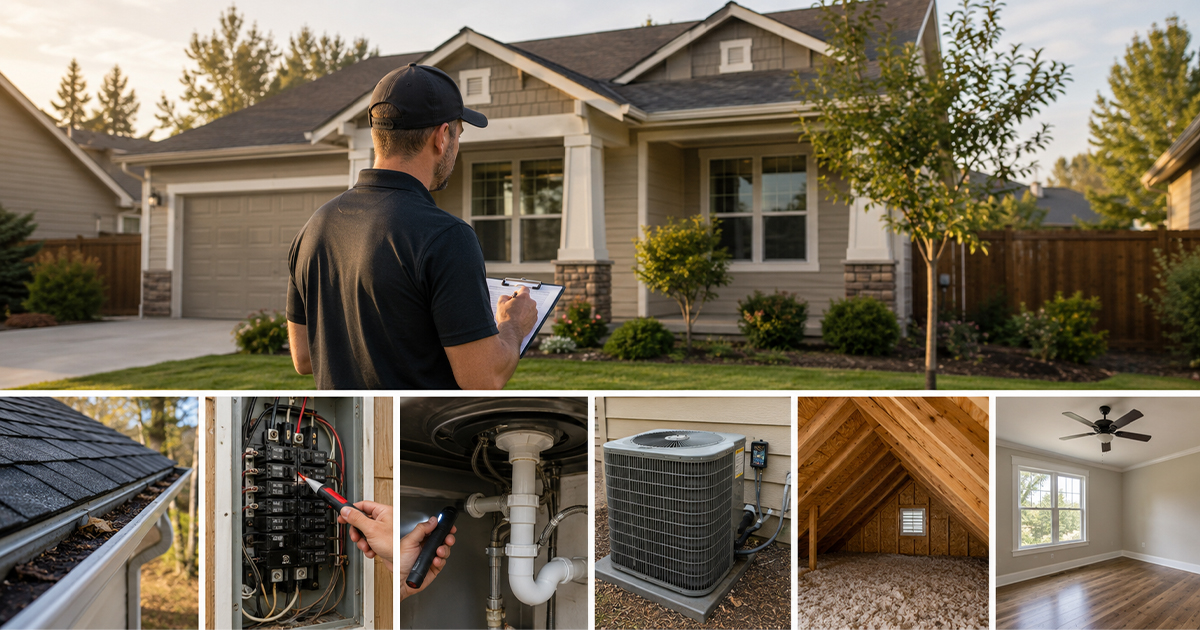
A residential property inspection gives buyers a structured understanding of a home’s visible and accessible systems before they complete a purchase. It is not a guarantee, a code-compliance inspection, or a prediction of every future repair. It is a professional, non-invasive evaluation of the conditions observed on the inspection date.
For buyers in Redding, Shasta County, and surrounding Northern California communities, the inspection should help answer three practical questions: What appears to be functioning as intended? What conditions may require correction or further evaluation? Which findings deserve attention first?
A well-organized inspection reviews the home as a collection of connected systems rather than a list of isolated defects.
What a Residential Property Inspection Is Designed to Do
A general home inspection is intended to identify visible defects in readily accessible systems and components. The inspector uses normal operating controls, visual observation, professional judgment, and selected non-destructive tools to evaluate the property.
The inspection is based on conditions present at one point in time. Furnishings, stored items, finished surfaces, insulation, soil, and building materials may conceal conditions that cannot be observed without destructive investigation. A professional inspector should clearly explain these limitations while still providing a thorough evaluation of accessible areas.
Roofing and Roof Drainage
The roof protects every system below it, so roof observations are a major part of the inspection. The inspector typically evaluates the visible roof-covering materials, flashing, roof penetrations, valleys, skylights, chimneys, gutters, downspouts, and accessible roof structure.
The report may identify damaged or deteriorated roofing, installation concerns, drainage deficiencies, visible leak indicators, or conditions that merit evaluation by a qualified roofing contractor. The inspection does not certify the roof, guarantee future performance, or establish an exact remaining service life.
Exterior and Building Envelope
The exterior inspection evaluates how the home manages weather, water, and physical exposure. Visible siding, stucco, trim, eaves, soffits, fascia, exterior doors, representative windows, decks, porches, stairs, guards, railings, walkways, and attached structures are commonly included.
Particular attention is given to flashing, sealant joints, grading, vegetation, surface drainage, and areas where moisture may be directed toward the structure. Many expensive interior moisture problems begin with exterior drainage or building-envelope deficiencies.
Foundation, Structure, and Crawlspace
The inspector evaluates visible foundation components, accessible structural framing, floors, walls, ceilings, and crawlspace conditions. The objective is to identify observable indicators such as cracking, movement, moisture intrusion, wood deterioration, inadequate support, or improper modification of framing members.
A home inspection is not a structural engineering analysis. When observations suggest significant movement, unusual cracking, or a potentially compromised structural component, the inspector may recommend further evaluation by a qualified contractor or engineer.
Electrical System
The electrical inspection generally includes the visible service entrance, meter, main disconnect, panelboards, overcurrent protection, grounding and bonding components, representative switches and receptacles, GFCI devices, and visible smoke and carbon monoxide alarms.
Common findings may include missing covers, improper wiring, damaged conductors, ungrounded receptacles, deficient GFCI protection, overheating indicators, or panel conditions that require evaluation by a licensed electrician. The inspector does not perform invasive testing or guarantee that concealed wiring is defect-free.
Plumbing and Water Heating
The plumbing inspection commonly includes visible supply piping, drain-waste-vent components, fixtures, faucets, toilets, functional drainage, the main water shutoff when visible, water-heating equipment, venting, temperature-pressure relief components, and accessible fuel-supply components.
The inspector runs water at fixtures and looks for active leakage, drainage problems, loose fixtures, corrosion, pressure or flow concerns, and installation deficiencies. Specialized services such as sewer scoping, well-system evaluation, water-quality testing, or irrigation inspection may fall outside the general inspection unless specifically included.
Heating and Cooling
Heating and cooling systems are operated using normal controls when conditions allow safe operation. The inspector identifies the observed heating and cooling methods, evaluates accessible equipment, and reports systems that do not operate or show visible deficiencies.
A general inspection does not provide a complete mechanical diagnostic, refrigerant analysis, combustion analysis, or engineering calculation. When equipment is damaged, unsafe, inaccessible, or performing abnormally, further evaluation by a qualified HVAC contractor may be recommended.
Attic, Insulation, and Ventilation
Accessible attic and unfinished spaces can reveal important information about roof structure, insulation, ventilation, moisture, electrical components, and mechanical exhaust systems. The inspector typically describes the observed insulation type and approximate depth and reports general deficiencies in insulation or ventilation.
Attic access may be limited by size, stored items, insulation, unsafe framing, extreme temperatures, or conditions that could damage the property. The inspector should document any limitations.
Interior Components
The interior inspection generally includes representative doors and windows, floors, walls, ceilings, stairs, guards, handrails, and permanently installed components. The inspector looks for functional concerns, visible moisture damage, safety issues, damaged finishes that may indicate a larger condition, and evidence of movement or deterioration.
Cosmetic conditions and matters of taste are usually outside the primary scope unless they indicate a functional, safety, or moisture-related problem.
Garage and Permanently Installed Appliances
The inspector commonly evaluates the attached garage, vehicle door, garage-door opener safety features, visible separation between the garage and living space, and permanently installed appliances when included in the inspection agreement.
Appliance operation is typically limited to normal controls. The inspection does not predict service life or guarantee future performance.
What Is Commonly Excluded
A general inspection is not technically exhaustive. Depending on the inspection agreement and Standards of Practice, exclusions may include concealed defects, environmental hazards, mold testing, asbestos identification, lead testing, engineering analysis, code certification, pest inspections, underground systems, septic systems, sewer laterals, wells, pools, spas, irrigation, and detached outbuildings.
Many of these areas can be evaluated through separate ancillary services. Buyers should review the property type and determine whether specialized inspections are appropriate.
How CM² Organizes the Findings
The value of an inspection depends on more than the number of defects listed. Buyers need context. CM² Signature Inspection Services organizes observations by system and risk so clients can distinguish significant concerns, safety issues, functional defects, routine maintenance, and informational items.
The goal is clarity, not alarm. A strong report should help the buyer understand what was observed, why it matters, and the logical next step.
The Bottom Line
A residential property inspection is a broad visual evaluation of the home’s accessible systems and components. It helps buyers understand current conditions, recognize material concerns, plan for maintenance, and decide when specialist evaluation is warranted.
No inspection can eliminate every risk. A qualified inspector can materially improve the buyer’s understanding of the property and provide a disciplined framework for decision-making.
Schedule a Residential Inspection
CM² Signature Inspection Services provides structured, risk-ranked residential inspections throughout Shasta County and surrounding Northern California communities.
EDITORIAL SOURCE NOTES
• InterNACHI Home Inspection Standards of Practice
• California Business and Professions Code provisions governing home inspections
• CM² residential inspection agreement and service scope
CM² Residential Knowledge Center
Structured. Risk-Ranked. Designed to Protect.
Knowledge Center Article #002
© CM² Signature Inspection Services | Northern California Home Inspection Resource