
A home inspection report can contain dozens—or even hundreds—of observations. For many buyers, the challenge is not the amount of information. It is understanding what deserves immediate attention, what should be monitored, and what can be handled through routine maintenance.
When every finding is presented with the same visual weight, buyers can lose perspective. A loose doorknob may appear beside an electrical safety concern, a roof leak, or a structural deficiency without a clear explanation of relative importance.
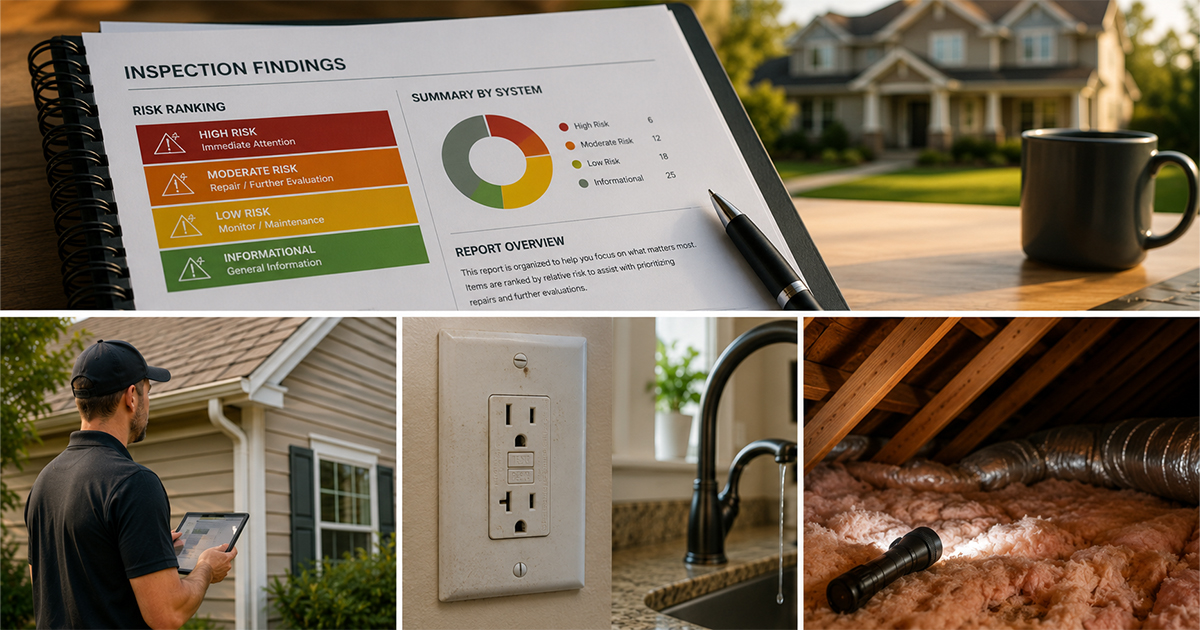
A risk-ranked inspection report solves that problem by organizing findings according to significance, system, and recommended next step.
Why Traditional Reports Can Feel Overwhelming
A property inspection is broad by design. The inspector may document roofing, drainage, foundation, structure, electrical, plumbing, HVAC, attic, interior, exterior, appliances, and safety-related conditions. Even a well-maintained home can generate a long report.
Length alone does not indicate that a home is defective or unsafe. Many observations are informational, maintenance-related, or typical for the home’s age. Without prioritization, however, the reader may struggle to distinguish normal ownership responsibilities from conditions that could affect safety, function, value, or the transaction.
The result can be unnecessary anxiety, missed priorities, or poor repair decisions.
What Risk Ranking Means
Risk ranking assigns findings to clearly defined categories based on their observed significance. The exact terminology may vary, but a useful system separates major or material concerns, safety issues, functional defects, maintenance items, and informational observations.
The purpose is not to predict the future or assign a dollar value to every condition. It is to help the client understand relative importance and sequence the next steps logically.
For example, active leakage at an electrical panel, a compromised structural support, or evidence of significant roof intrusion should not be buried among cosmetic cracking and minor hardware adjustments.
Clarity, Not Alarm
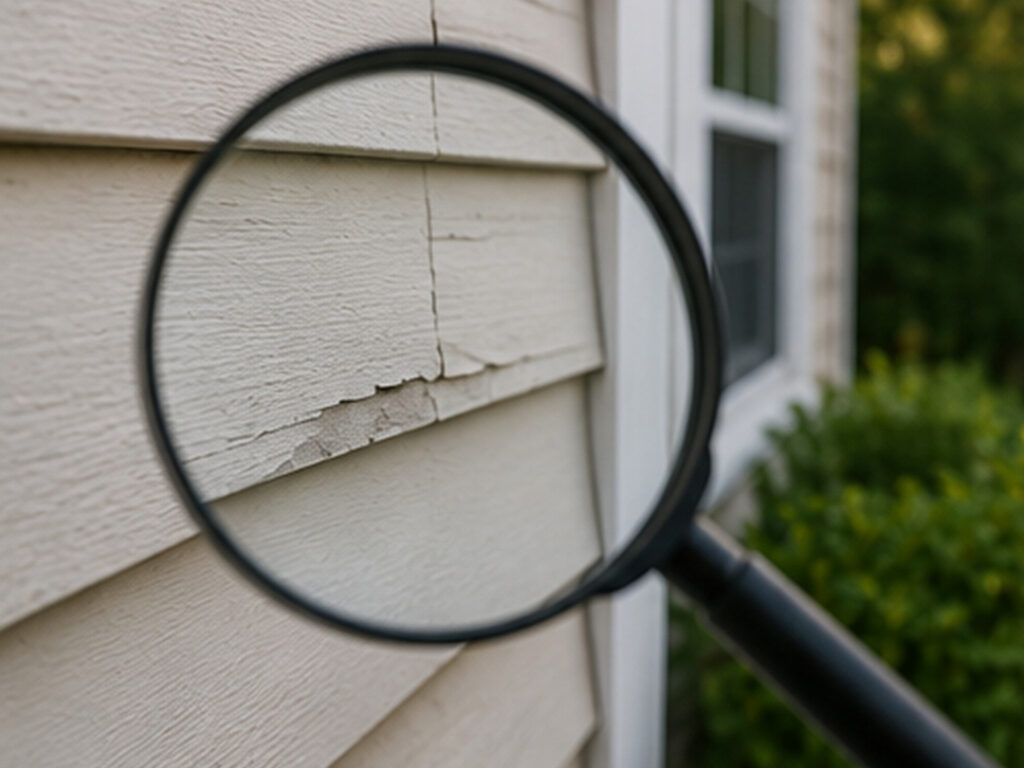
A strong inspection report should educate without sensationalizing. Buyers need factual descriptions, supporting photographs, practical context, and recommendations that match the observed condition.
Risk ranking supports a “clarity, not alarm” approach. It allows the report to explain what was observed, why it matters, and who should evaluate or correct it—without implying that every defect is catastrophic.
This is especially important in older Northern California homes, where aging systems, prior repairs, and construction methods may differ from current practices without automatically making the property unsafe.
How Risk Ranking Supports Better Decisions
Prioritization helps buyers make decisions in several ways.
First, it improves negotiation focus. Rather than submitting a repair request based on every line item, buyers and agents can concentrate on material, safety, and functional concerns.
Second, it supports financial planning. A buyer may decide that an aging roof, older HVAC system, galvanized plumbing, or deferred exterior maintenance is manageable, provided the likely capital needs are understood.
Third, it helps organize post-closing work. The report can become a practical maintenance and improvement roadmap instead of a document that is forgotten after escrow.
Finally, it reduces the chance that a serious item is overlooked because it was visually buried among lower-priority observations.
Severity Is Only Part of the Story
A useful report should also organize findings by system and explain the relationship between conditions.
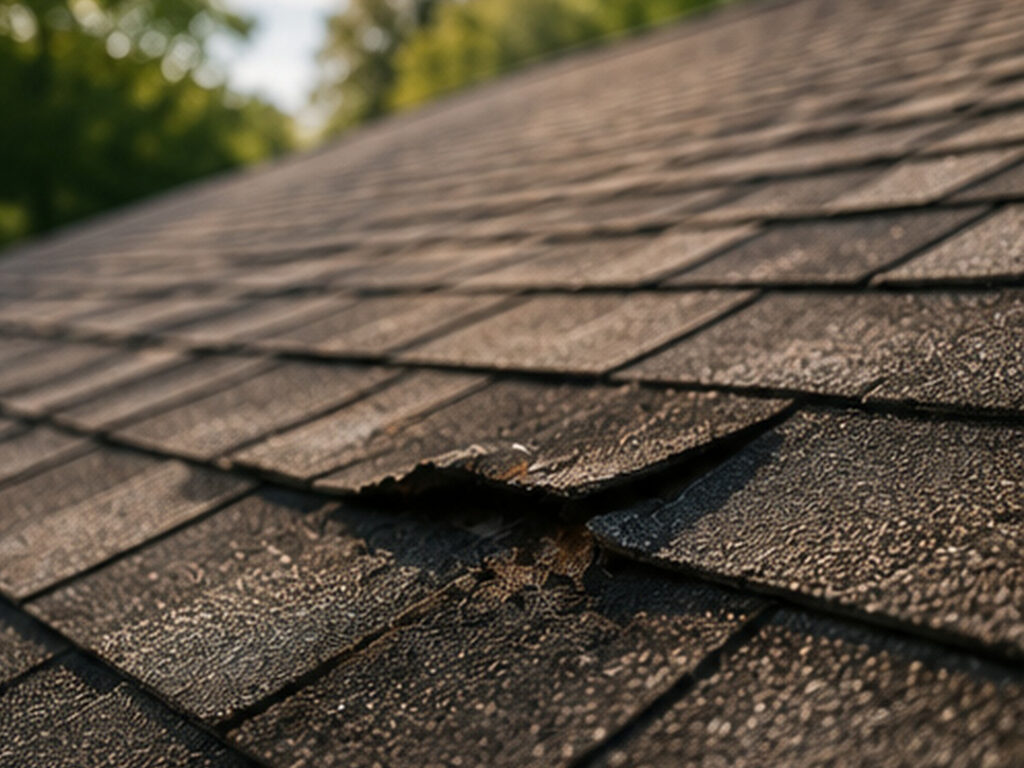
For example, an interior ceiling stain may connect to roof flashing, attic ventilation, plumbing, or condensation. Crawlspace moisture may relate to grading, irrigation, plumbing leakage, drainage, or inadequate ventilation. A risk-ranked report should preserve the system context while identifying the relative urgency.
The best reports do not simply label a defect. They help the reader understand the building as an integrated system.
The Role of Photographs and Narrative
Photographs are valuable when they clearly identify location and condition. However, a report should not rely on images alone. The narrative should explain the observed deficiency, the significance, and the recommended next step.
Vague language such as “repair as needed” may leave the buyer uncertain. A stronger comment identifies the affected component, describes the condition, explains the concern, and recommends evaluation or correction by an appropriate professional when warranted.
Risk ranking adds another layer by showing how the finding compares with the rest of the report.
Risk Ranking and Long-Term Capital Planning
Homeownership includes both routine maintenance and larger capital expenditures. Roofing, HVAC equipment, water heaters, exterior coatings, drainage improvements, electrical upgrades, and plumbing replacement can require significant investment over time.
A home inspection cannot provide exact remaining service life or guaranteed cost estimates. It can, however, document visible condition, age-related concerns, performance limitations, and signs of deferred maintenance.
When findings are organized by risk and system, buyers can begin separating immediate repairs from medium-term planning and normal long-term ownership costs.
This is particularly useful for investors, repeat buyers, and clients purchasing legacy homes.
What a Risk-Ranked Report Should Not Do
Risk ranking should not exaggerate conditions, make engineering conclusions without supporting qualifications, guarantee future performance, or replace specialist evaluation.
It also should not imply that a home “passes” or “fails.” Homes are complex, and nearly every property has defects. The report exists to improve understanding, not to issue a transaction verdict.
The inspector’s responsibility is to present observed conditions accurately and consistently within the agreed scope.
How CM² Structures Inspection Findings
CM² Signature Inspection Services uses structured, risk-ranked reporting to help clients separate significant concerns from routine maintenance and informational observations.
Our reports are organized by building system and supported by photographs, plain-language narratives, and practical recommendations. The objective is to make the report useful to buyers, agents, contractors, and future homeowners without allowing minor items to overshadow meaningful risk.
This framework also supports more disciplined financial decision-making by helping the client identify immediate priorities, potential specialist evaluations, and longer-term capital considerations.
Structured. Risk-Ranked. Designed to Protect.
Questions to Ask When Reviewing a Sample Report
Before selecting an inspector, review a sample report and ask:
• Are findings clearly categorized by significance?
• Can I quickly identify safety and material concerns?
• Does the report explain why each condition matters?
• Are recommendations specific and practical?
• Are photographs labeled and relevant?
• Can I distinguish immediate needs from maintenance?
• Is the language factual rather than alarmist?
• Does the report support follow-up questions after the inspection?
The Bottom Line
The value of a home inspection report is not measured by page count. It is measured by how effectively the report converts observations into understanding.
A risk-ranked report gives buyers a clearer view of the property, improves repair prioritization, supports financial planning, and reduces the likelihood that important conditions will be lost in the volume of information.
View a Sample Report or Schedule an Inspection
CM² Signature Inspection Services provides structured, risk-ranked inspections throughout Shasta County and surrounding Northern California communities.
EDITORIAL SOURCE NOTES
• InterNACHI Home Inspection Standards of Practice
• CM² report classification and risk-ranking framework
• CM² residential inspection agreement and sample reports
CM² Residential Knowledge Center
Structured. Risk-Ranked. Designed to Protect.
Knowledge Center Article #003
© CM² Signature Inspection Services | Northern California Home Inspection Resource